


What is Labour Trafficking?
Labour trafficking, also known as forced labour, is the control and exploitation of a person for their labour or service, usually through the use of force, fraud, or coercion for the purpose of financial gain.
The Action-Means-Purpose (AMP) model is a framework to help us better understand human trafficking.
Action-Means-Purpose Model

Traffickers need to do something to their victim (which is the action), using methods of control (which are the means), for a reason that benefits the trafficker (which is the purpose). For a situation to qualify as trafficking, there only needs to be one action, one means, and one purpose. It’s common for there to be multiple actions, means, or purposes involved; especially multiple means.
Human trafficking is a severe violation of human rights that tears away our universal right to autonomy and self-determination. It can take on many forms including sex trafficking, labour trafficking, and organ trafficking.
Watch a short video to solidify your understanding
Who Can be Labour Trafficked?
Victims of forced labour come from diverse backgrounds and can include men, women, and children. Anyone can be a victim of labour trafficking, but some individuals are at higher risk. Those most at risk are individuals facing financial hardship, migration challenges, or limited job options, as well as those living in rural or remote areas where labour laws may not be well enforced.
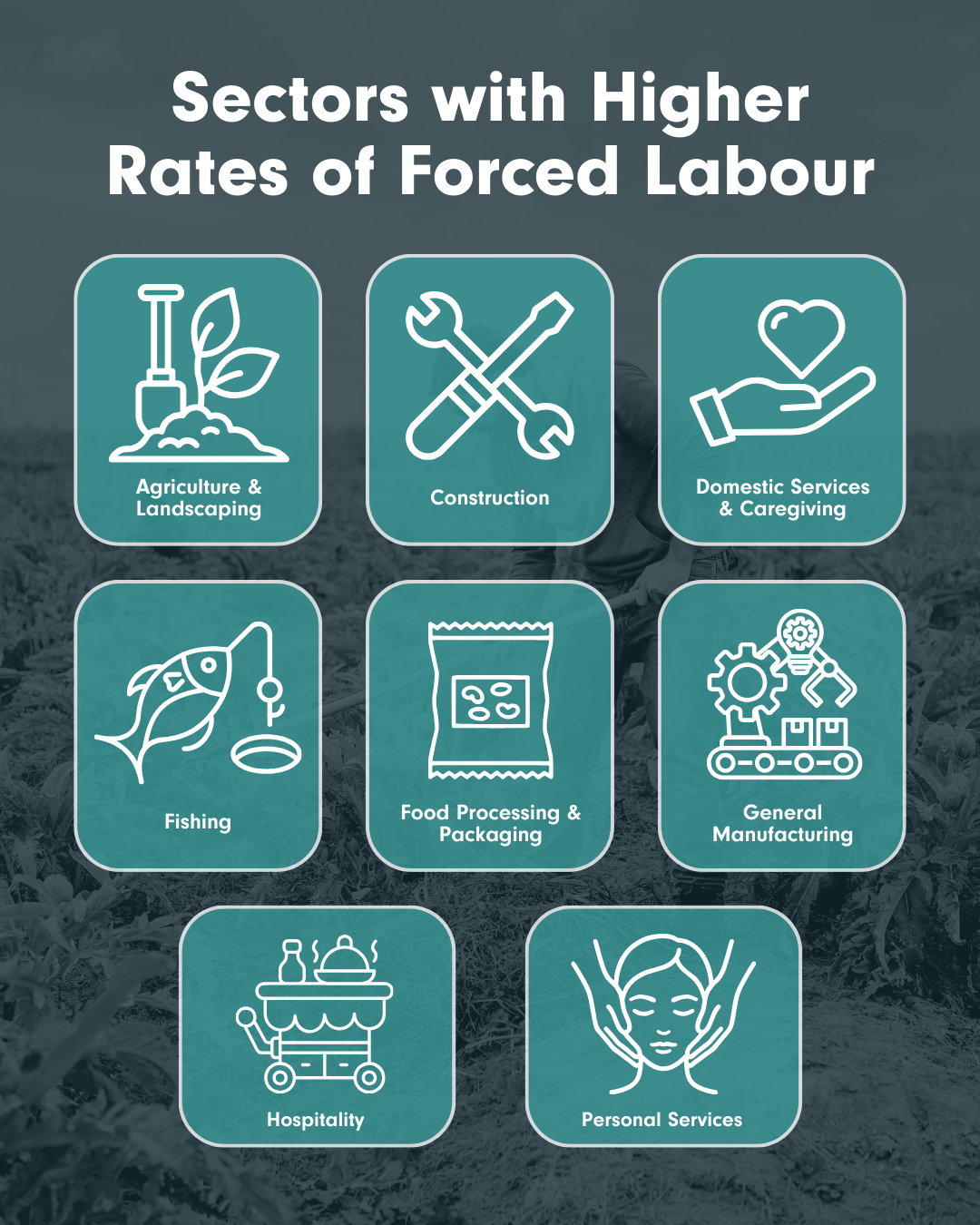
Some sectors commonly have higher rates of forced labour due to factors such as low wages, lack of regulation, remoteness of the work site, and limited workers’ rights.
Common sectors where forced labour is often reported in Canada include:
Agriculture and horticulture, including landscaping
Construction
Domestic service and caregiving
Fishing
Food processing and packaging
General manufacturing
Hospitality
Personal services (spas, salons, esthetics, massage parlours)
It’s important to note that forced labour can occur in any sector, and the prevalence of trafficking in different sectors may vary across regions.

55% of Canadians don’t believe or don’t know that labour trafficking is a major issue in Canada.
Sometimes a person may choose to enter a job or situation willingly, but it can later turn into forced labour, exploitation, or labour trafficking. At first, they might not know the full truth about the job, or the situation may change over time in ways that reveal manipulation, lies, or pressure.
People may enter or stay in an exploitative situation for many reasons. These can include wanting to get permanent residency in Canada, escaping abuse or danger in their home country, or needing money to support themselves or their families. These pressures can make people more vulnerable to unsafe or exploitative work conditions.
Certain factors can increase the risk of labour trafficking, including:
Precarious immigration status (such as having no permanent residence, a closed or restrictive work permit, or limited access to social benefits)
Economic hardship or unemployment
Language barriers that make it difficult to understand rights or access help
Lack of local connections, support systems, or community ties
Dependence on employers for housing, documents, or basic needs
Working in remote or rural areas where labour protections or services are harder to reach
Labour Trafficking Vulnerabilities
Potential Risks for Temporary Foreign Workers (TFWs)
The Canadian Temporary Foreign Worker Program (TFWP) lets employers hire workers from other countries when they cannot find Canadians to fill certain jobs. Employers must follow a formal process and prove that they genuinely need a foreign worker.
Once an employer gets approval, called a positive Labour Market Impact Assessment (LMIA), the worker can apply for a work permit. Most TFWs receive a closed work permit, which ties them to one employer. This means they cannot easily change employers, even if they are being mistreated. If the employer breaks the rules or behaves unfairly, the worker may feel unable to speak up or leave, fearing they could lose their job, their income, or their ability to stay in Canada.
Temporary Foreign Workers also face challenges because of their immigration status. Unlike refugees or permanent residents, TFWs often cannot access many government‑funded support services. Many immigration agencies are only allowed to help certain groups, which means TFWs may be denied services simply because they are not eligible.
As a result, TFWs seeking assistance are often turned away from these agencies as they do not meet the eligibility criteria for services. This creates a significant gap in the safeguards for TFWs and hinders the detection of human trafficking by the authorities.

100% of ACT’s labour trafficking clients are migrant workers.
Labour Trafficking Indicators
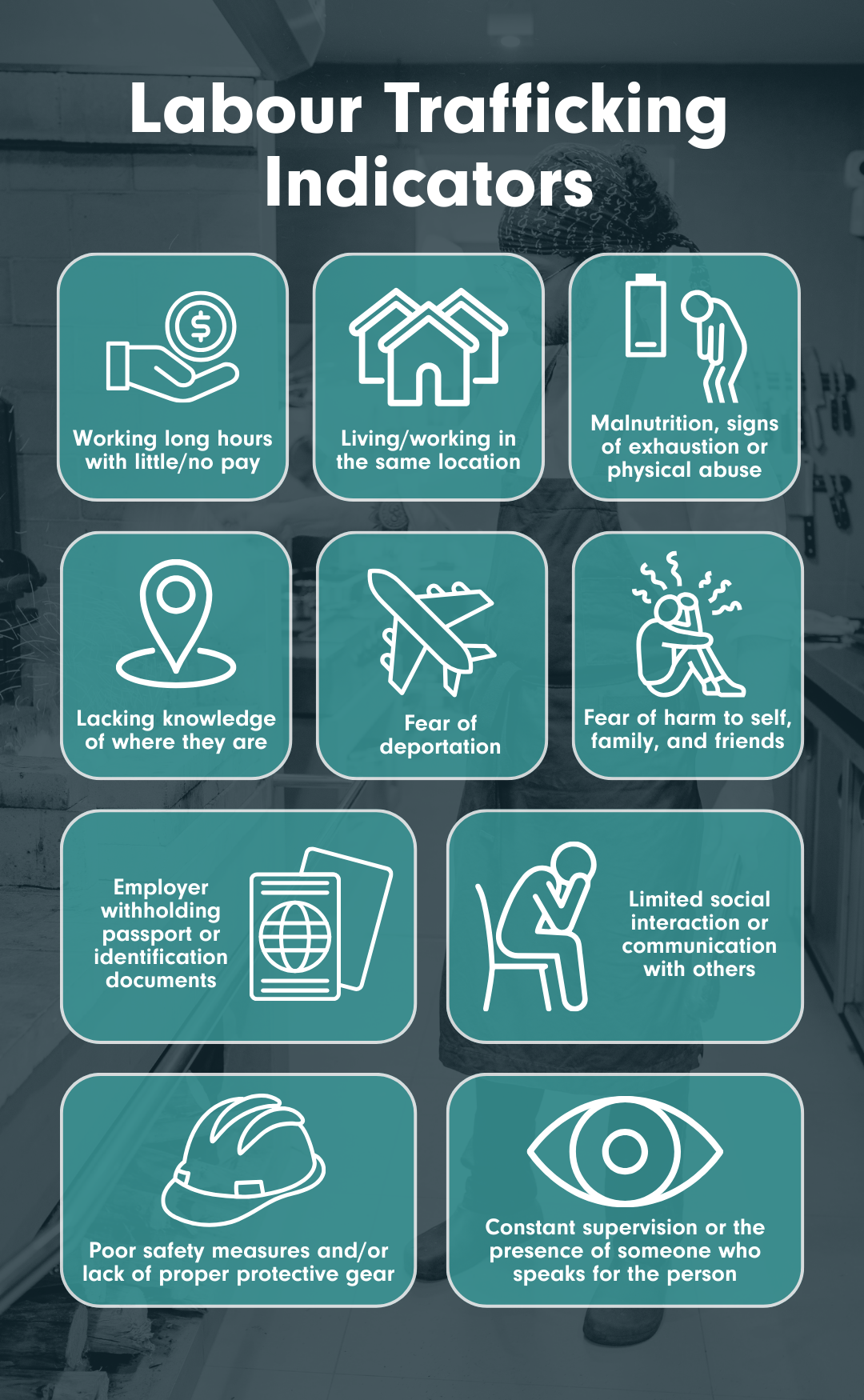
Recognizing the signs can help prevent further harm and connect victims to support. Seeing one sign by itself doesn’t always mean trafficking is happening. Try to look at the bigger picture and notice whether several behaviours or concerns are happening at the same time.
Some indicators of labour trafficking may include:
Working excessively long hours with little or no pay
Living and working in the same location
Malnutrition, signs of exhaustion, or signs of physical abuse
Lack of knowledge about where they are or what city they’re in
Employer or recruiter withholding passports or identification documents
Limited social interaction or communication with others
Fear of harm to self, family, and friends
Fear of deportation
Inadequate safety measures and/or lack of proper equipment or protective gear
Constant supervision or the presence of someone who speaks for the person
Intersections with Other Types of Trafficking
Forced labour may intersect with other forms of exploitation or trafficking, which makes this issue even more challenging to tackle. Other types of exploitation that intersect with forced labour include sex trafficking, forced criminality, forced peddling and begging, forced marriage, and organ trafficking.
For example, some victims of forced labour may also be forced into sexual exploitation by their employer or another perpetrator. In other cases, victims of sexual exploitation or sex trafficking are forced to participate in forms of domestic work.

Every Worker Deserves Safety and Fair Treatment.
Know Your Rights as a Worker in Canada
No matter where you come from or what job you do, workers in Canada have protected rights. These rights are designed to keep you safe, ensure you are treated fairly, and prevent employers from taking advantage of you.
The rights of all workers in Canada, including migrant workers, are protected by law.
You have the right to be paid fairly for the work you do
You must receive the wages your employer promised you, including overtime if it’s part of your work agreement
You do not have to pay back any fees your employer paid to recruit or hire you
You have the right to a safe and healthy workplace. You should never have to live or work in unsafe conditions
You have the right to say “no” to unsafe work without losing your job
Your employer cannot force you to work if you are sick or injured
You have the right to come and go freely and stay in contact with family and friends
Your employer must provide a workplace that is free from abuse, including threats, punishment, or unfair treatment
You have the right to keep your personal documents, such as your passport or work permit
You have the right to get help or report mistreatment without retaliation
Only the Canada Border Services Agency can change your immigration status or deport you, NOT your employer
These rights apply to all workers, including Temporary Foreign Workers, migrant workers, and part‑time or full‑time employees. Even if your work permit ties you to one employer, you are still protected by Canadian labour laws.
Do you need help?
You are not alone.
If you (or someone you know) is a survivor of human trafficking, we can help get the support you need.
If you are in immediate danger, please dial 911.